
Respond, Improve, Innovate: Using AI to Make Connections for Product & Service Development
/Welcome to Part 2 of how to leverage artificial intelligence (AI) in customer-facing settings. In Part 1, we offered customer fundamentals. Here we focus on linking data (e.g., questions, suggestions, complaints) documented by intelligent virtual assistants (IVA) to product and service development teams. Based on the following research and experience, we suggest building these three organizational structures into your IVA approach:
Employee autonomy to interact with AI-sourced data - opportunities to dig into the data
Incentives plans that motivate employees to interact with AI-sourced data - perhaps award programs that share success stories
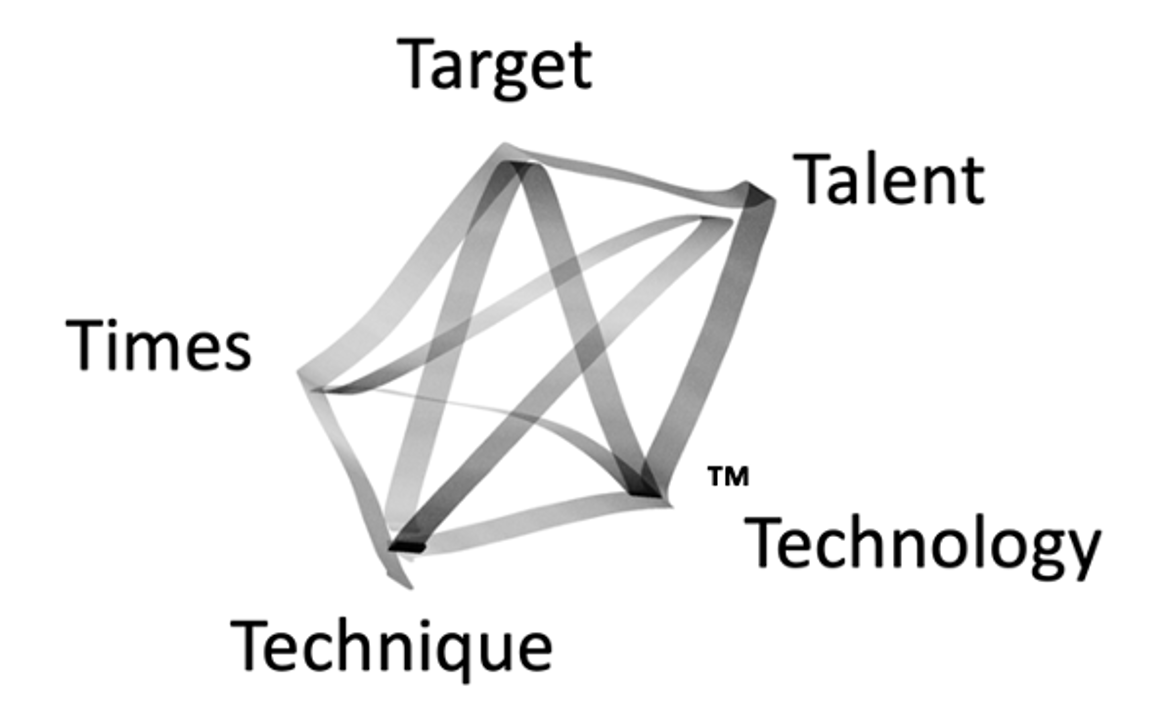
Communication practices that cross departments and hierarchical levels - customer issues are rarely bound by traditional organizational boundaries. Responses to customer queries are likely stronger to the extent that they weave together the organization’s talent, technology, and techniques rather than more limited approaches.
Thanks to Utpal Mangla, VP and Senior Partner, IBM, for joining me in this post. Under Utpal's leadership, his team recently achieved its mission of making "Watson AI Impact 1 Billion Consumers." Utpal and I are officers within the ISSIP (International Society for Service Innovation Professionals) organization.
In our prior post, we said, “AI may usher in a golden age of customer contributions to product and service innovations. Customer service interactions offer opportunities both during the interaction and then, in a more macro sense, from the organization’s ability to glean insights from trends across interactions. However, there is never a silver bullet -- new technology tools must be introduced alongside training for customer service and product development talent and new techniques that keep the knowledge flowing from customers to people in design roles.” Starting from a classic study of 169 of Denmark’s largest firms, we bring the ideas into the 21st Century to offer a set of best practices to help managers leverage AI to create tighter ties between customers and organizational innovators.
In the Beginning
Value from individual interactions and trends may have been easy for an organization when it was small. In the beginning, company founders personally answer customer service calls - there’s no one else to answer the phone. Founders can learn from these one-on-one interactions where their products and services need improvement or may have additional opportunities along the development roadmap. As the company grows, customer service becomes its own area and may have less connection with product development. Unfortunately, bad news generally doesn’t flow up the hierarchy well. Even good news or suggestions from happy customers may have more trouble making it to the design team if those groups are separated. Sales representatives may be too busy selling to share customer requests. Even when people are sitting next to each other, they may not know what knowledge might help their colleague. Innovation scholar, Andrew Hargadon, quotes a Boeing manager:
There are cases where the person who has the knowledge can be sitting right next to you and it goes unnoticed and you plow a lot of ground that you didn't necessarily have to. There's still a lot of duplication of effort. There just isn't any way that I know of to really make that happen so that all knowledge that has ever been done on something is available to the person at the time in which they need it. It's all a matter of getting the right knowledge into the right hands at the right time.
From 2001 to 2021
In 2001, researchers Nicolai Foss, Keld Laursen, and Torben Pedersen sent surveys to Denmark’s 1000 largest firms. The results showed that customer interactions offer value to innovation to the extent that teams and individuals have autonomy, communication across departments and levels, and incentives for knowledge sharing.
In 2008, Motor [a pseudonym] was founded in the UK based on pricing auto insurance based on driving behaviors collected via a telematics device. Researchers Helen Perks, Thorsten Gruber, and Bo Edvardsson report that the founders didn't do traditional market research given the idea was so new. Instead, the founders wanted to have an on-going dialog with their customers. By 2011, Motor had 33,000 customers and 100 staff. Perks and her colleagues offer this example of how customer interactions played a role in the evolution of the service:
... the idea for the development of bimonthly payment terms... was initiated by a high level of calls to the service call center from customers asking when Motor would be introducing different payment terms. A series of activities from Motor, including enduring adaptations of its financing procedures, ensued. Similarly, the development of a new process for renewals, with new driving behavior-based discount features… was triggered by the lead firm reacting to multiple customer enquiries direct to the call center and on Facebook.
Foss and his colleagues identified three organizational techniques to support the translation of customer interactions into innovations:
Employee autonomy to create the opportunity to interact with customers
Incentives plans that motivate employees to share what they learn from customers
Communication practices that cross departments and hierarchical levels
The critical mechanisms are collecting valuable information, learning from the information, and making sure the information makes it into the innovation process.
Enter Artificial Intelligence
Intelligent virtual assistants (IVAs, including chatbots, digital assistants, virtual assistants) can offer productivity and cost reduction. IVAs can also learn as they go, and as we will describe in our next post (link TBA), can work alongside their human customer loyalty representatives to offer alternatives and additional products or services.
Three Steps Between Customer Interaction and Innovation
IVAs are tireless documenters of customer issues where IVAs serve as the first point of contact for a growing number of customers. As the customer loyalty team tunes an IVA, human support agents receive fewer simple customer issues. What happens when a customer makes a suggestion or a segment of customers report concerns with a product or service? Do companies like “Motor” still gain ideas for innovation from interacting with their customers when an IVA is the intermediary?
Respond, Improve, Innovate
Teams monitoring customer interactions have at least three steps as IVA data comes in and the team members notice an aggregation of issues that the current forms of the IVA cannot handle: respond, improve, innovate. Here is an example demonstrating how value is enhanced through every IVA conversation and interaction with customers as the respond, improve, innovate process plays out.
Vodacom (Vodafone, South Africa)
TOBi, the Vodacom chatbot, was brought to the customer service team and initially could help with a few sets of simple customer queries. As the IVA support & maintenance teams noticed the types of questions customers asked TOBi, the team added new features and functionalities. Their process included steps that improved TOBi, but also a step for taking ideas back to product development:
![[Here Vodacom is encouraging customers to ask complex and difficult questions to accelerate the data collection for TOBi’s growth.]](https://images.squarespace-cdn.com/content/v1/569c48c21a520349a50f5174/1616537517359-ERSJWGIBMK4KOKSZYZE7/TOBiChat.png)
[Here Vodacom is encouraging customers to ask complex and difficult questions to accelerate the data collection for TOBi’s growth.]
Initial Response: Create a static website to quickly respond to customer’s questions if many queries are similar. (Consider a broad example: a mortgage company hit with many COVID-related questions might promptly put up a COVID FAQ webpage.) If questions are customer-specific, deflect to a customer service representative
Improve:
Add new responses to the IVA for the “intents” underlying customers’ queries. For example, with TOBi, customers may want more to buy additional products (add an intent: Buy Bundles) or learn how to swap the pre-paid SIM cards themselves (add an intent: Do a SIM SWAP).
Adding additional channels is another example of improvement based on customer feedback gained via IVA. Companies tracking requests in many developing countries may find preferences to use WhatsApp, given different fee structures for mobile devices.
Innovate: Sometimes the customers’ request doesn’t exist (example: Buy Bundles). Adding the offering and the matching response for the intent is a chance to innovate based on customer information — just as company founders did when they were personally taking customer calls.
Autonomy, Incentives, Communication: Gaining Innovation Insights From Customers Interacting with Intelligent Agents
The innovate response shows that an IVA can help in monetizing new revenue opportunities -- but only if the structures from the research noted above are in place. We can leverage Foss and his colleagues’ findings to strengthen the Response-Improve-Innovate process in organizations, especially as their results speak to the teams working with IVAs. Innovation comes to the teams tasked with monitoring customer interaction data (and employees more broadly) if the organization offers:
Employee autonomy to interact with AI-sourced data - opportunities to dig into the data
Incentives plans that motivate employees to interact with AI-sourced data - perhaps award programs that share success stories
Communication practices that cross departments and hierarchical levels - customer issues are rarely bound by traditional organizational boundaries. Responses to customer queries are likely stronger to the extent that they weave together the organization’s talent, technology, and techniques rather than more limited approaches.
These three suggestions are based on research done before IVAs and other forms of artificial intelligence were common. What does your experience using IVAs today suggest we should add to this list to better leverage customer data for innovation? The comments box is open below.