
SYSTEMS SAVVY -- DO YOU HAVE IT?
/Systems Savvy -- Do You Have It?
Systems Savvy is the ability to grasp the capabilities of a technology and how that technology might be meshed with organizational practice. People with systems savvy understand that technologies and practices are intertwined -- and they know how to make adjustments to both the technology and the practice to effectively weave them together. Who has systems savvy? I suspect all the readers of this blog have some degree of systems savvy. However, there are folks whose efforts and thinking make them excellent models for all of us:
- Brian Humphrey, LA Fire Department
- MIT Professor Pattie Mae and Ph.D. Candidate Pranav Mistry
- Tony Hsieh, Zappos
- John Seely Brown, past Chief Scientist at Xerox and past Director of the Palo Alto Research Center
My examples in this blog tend to focus on information technology, but systems savvy also applies to industrial and other technologies. For example the first person who thought about how farm chemicals might be more safely, cheaply, and effectively applied by "plug-and play" direct connectors (versus farmers having to fill, mix, and refill their spreaders by hand) also had systems savvy. Technology possibilities provided opportunities for better, safer, practice -- but these had to be realized and implemented by people with systems savvy.
Deep technical or organizational expertise is not required for systems savvy. It's an appreciation of the possible... which might even be limited by deep expertise if people instead anchor on present uses. A degree of systems savvy is critical to both technical and organizational designers. Systems designers (the people that design the technologies we use) with systems savvy can design the technology with "triggers" to help others better understand the possible uses of their technology.
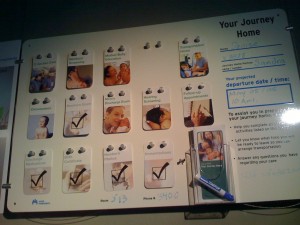
For example, IDEO and Kaiser Permanente co-designed an information board that helps new parents and nurses keep track of the "journey home" following the birth of the baby. The technology had clearly "flippable" cards (designating whether the step was completed or not), a whiteboard surface and pen, and clearly marked areas for adding information. The design makes clear that cards can be reordered, should be flipped as steps occur, and provides a clear dashboard of the process.
Organizational designers with systems savvy can imagine how not-yet invented technologies might help their organizations effectiveness and efficiency, and ask for such technologies to be designed. Hilton Hotels issued a Request for Proposals last year asking for "game" tools to help them show employees how different actions can affect a guest's mood. Hilton's training exec David Kervella saw the value in a particular technology form, but had to get technical experts to help him realize the vision. My ideas on systems savvy are a work in progress and I would appreciate your comments. Some earlier stages in this evolution include:
- Systems conductivity (here & here)
- Accidental systems designers
- Mental models of systems
I hope to spend some of my summer interviewing people who have demonstrated systems savvy. Beside those I note above, who else do you think has systems savvy? Personal introductions appreciated.